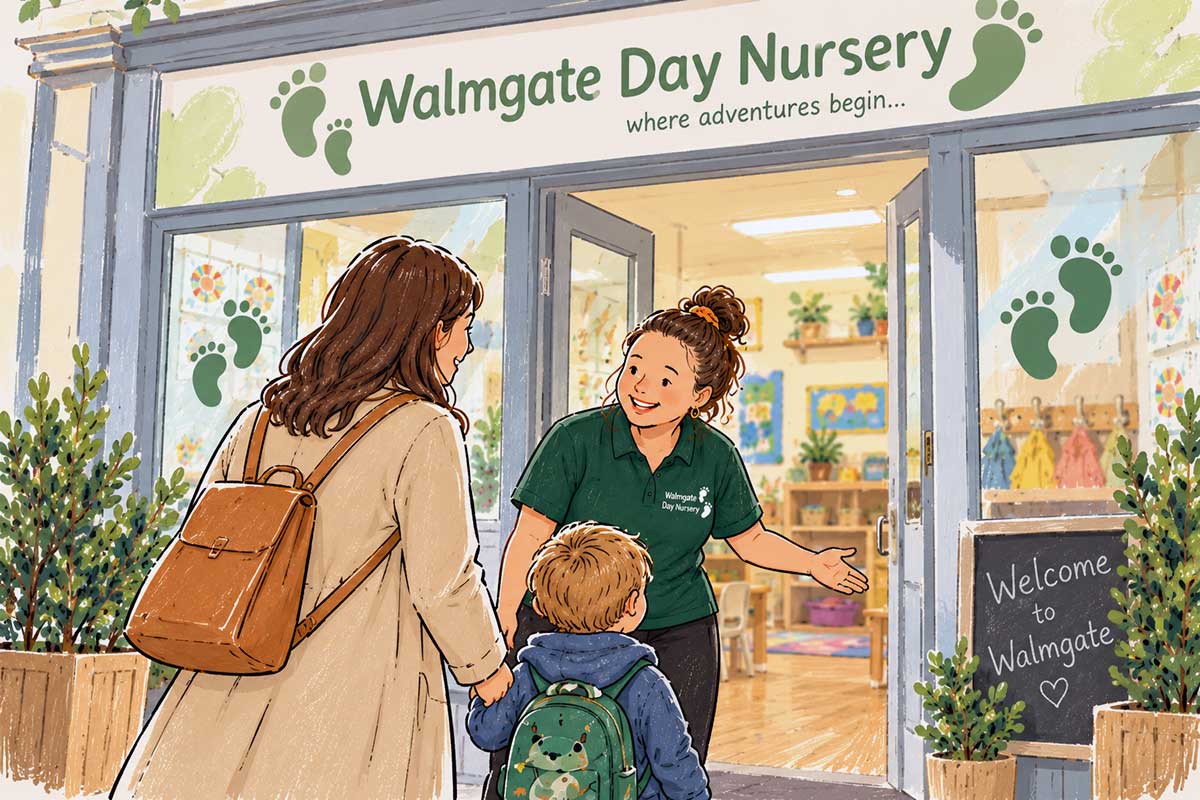
What to ask, what to notice and how to get a real feel for a nursery before choosing childcare
Visiting a nursery is about much more than looking at the rooms and finding out what time it opens. It is your opportunity to see what everyday life is actually like and to understand how the people there will get to know, care for and support your child.
You don’t need to arrive with a list of 30 questions. A handful of good ones can tell you far more, particularly if you also pay attention to what is happening around you.
The most useful questions to ask cover your child’s typical day, their key person, settling in, learning and play, outdoor time, communication with parents, and exactly what the fees include. Here are seven questions worth asking when you visit a nursery.
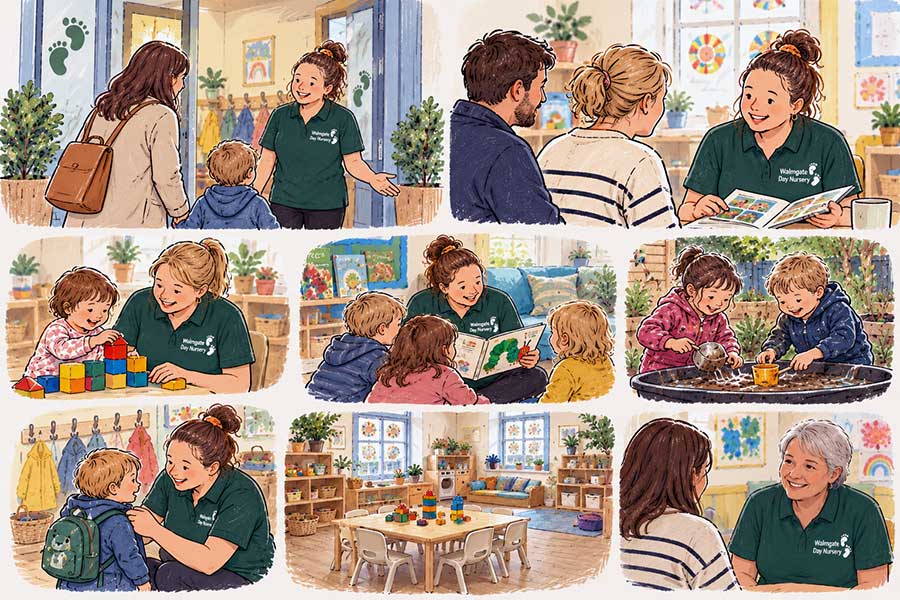
1. What does a typical day at nursery look like?
This is a useful place to start because it gives you a picture of what your child will actually experience.
Ask how the day balances routines such as meals, naps and group activities with time for children to play, explore and follow their own interests. For babies especially, you may also want to know how much the nursery can accommodate individual feeding and sleeping routines.
Don’t worry if there isn’t a rigid timetable. What you’re trying to understand is how the nursery combines familiar routines with enough flexibility to respond to individual children.
2. Who will get to know my child?
The people caring for your child matter enormously, so ask how the nursery’s key-person system works in practice. At Walmgate, our approach to smaller nursery groups is partly about giving practitioners the opportunity to build strong relationships and really get to know the children in their care.
Who is likely to be your child’s key person? How will they get to know your child’s routines, interests and personality? What happens when that person isn’t there? Will my child be cared for by the same familiar practitioners?
While you’re visiting, watch the other practitioners too. Notice how they speak to children, whether children seem comfortable approaching them and how adults respond when a child wants their attention. These ordinary interactions can tell you a great deal about a setting.
3. How will you help my child settle in?
Starting nursery is a significant change, and children respond to it differently.
Ask what settling-in sessions are offered and whether the approach can be adapted if your child needs a little longer. It is also worth asking how the nursery gets to know your child’s existing routines and how they will communicate with you during those first days and weeks. If you’re approaching this stage yourself, our guide to preparing your child for their first day at nursery has some practical tips.
There isn’t one settling-in process that will suit every child, so listen for an answer that recognises individual needs rather than promising that everyone settles within a particular number of days.
4. How do children learn and choose what to do?
Early years learning doesn’t need to look like school.
Ask how activities are chosen, how practitioners respond to children’s interests and how much opportunity children have to initiate their own play. If a nursery talks about being child-led, ask for an example of something children have recently become interested in and where that interest led. You can also ask how the setting approaches the Early Years Foundation Stage (EYFS) in everyday nursery life.
A concrete example can tell you much more than educational terminology. While you’re looking around, notice whether children seem able to make choices and become absorbed in what they’re doing.
5. How much time do children spend outdoors?
If outdoor play matters to your family, ask what it actually looks like rather than simply whether the nursery has a garden.
Do children have regular opportunities to go outside? What happens when it rains or gets cold? Can children explore, get messy and challenge themselves, or is outdoor time more structured?
At Walmgate, outdoor play is part of everyday nursery life, with opportunities for children to move, investigate and follow their curiosity throughout the year.
6. How will you keep me involved in my child’s day?
Ask how information is shared between home and nursery.
For younger children, that might include food, sleep and nappy changes alongside the more interesting moments from their day. As children grow, you may want to know how practitioners share their interests, development and any concerns.
Also ask what happens if you want to discuss something. Good communication should work both ways.
7. What exactly is included in the nursery fees?
This is worth establishing before making comparisons between nurseries.
Ask what the quoted fee includes and whether there are additional charges for meals, nappies, trips or other activities. Comparing the total cost rather than the headline fee will give you a much clearer idea of what you’ll actually pay.
If you’re eligible for funded childcare, ask how the nursery offers funded hours and whether there are any associated charges you need to understand. You can see how we set out our own nursery fees at Walmgate.
It is also worth checking opening hours, holiday arrangements, notice periods and what happens when your child is absent.
Getting the practical details clear now makes it much easier to compare your options properly.

Don’t just ask questions – watch what happens
Some of the most useful information on a nursery visit doesn’t come from asking anything.
Look around while normal nursery life is happening. Are children absorbed in what they’re doing? Do they appear comfortable with the adults around them? How do practitioners respond when a child asks for help, becomes upset or wants to show them something?
Don’t expect silence, immaculate rooms or every child to be smiling. Nurseries are busy places and play can be messy. Instead, pay attention to the relationships and interactions taking place around you.
How do I know if a nursery feels right for my child?
Once you’ve asked about routines, staff, learning, outdoor play and fees, there is one question nobody at the nursery can answer for you:
Can I picture my child here?
Different families will value different things. A nursery can look impressive on paper and still not feel like the right environment for your child.
Give yourself time after the visit to think about what you saw, what you heard and how the nursery felt when you were there.
Visiting Walmgate Day Nursery in York
If you’re currently looking for childcare in York, you’re very welcome to come and see Walmgate for yourself.
We’re a small, family-owned nursery in York city centre, and a visit gives you the chance to meet our team, see the different rooms and outdoor space, and ask us any of the questions above, as well as anything else that’s important to your family. If you’re currently looking for childcare in York, you’re very welcome to come and see Walmgate Day Nursery for yourself. We encourage parents to ask questions when they visit – there isn’t anything on this list you shouldn’t feel comfortable asking us.
If you’d like a look around before arranging a visit, you can also explore Walmgate with our 360° virtual tour.
FAQ: Visiting a nursery
There isn't a standard length. When booking, ask how much time is available so you know whether you'll have an opportunity to see the nursery and discuss your questions without feeling rushed.
Ask the nursery what they recommend. Taking your child can give you an opportunity to see how they respond to the environment, although one short visit shouldn't be treated as a definitive test of whether a nursery will suit them.
You can. Seeing different settings can help you understand what matters most to you and make comparisons, but there isn't a particular number of nurseries every family needs to visit.
Look beyond the building and equipment. Pay particular attention to how practitioners interact with children, whether children appear comfortable approaching adults, how the environment is being used and what ordinary day-to-day life feels like.
Ask about a typical day, the key-person system, settling in, learning and play, outdoor time, communication with parents and what is included in the fees. It is also worth asking anything specific to your child's routines, interests or needs.