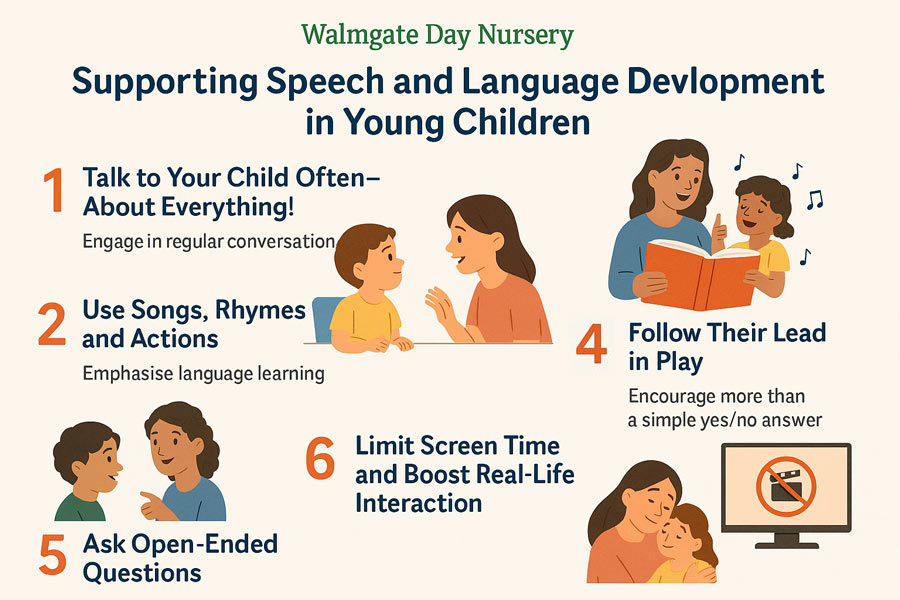
How to Support Speech and Language Development in Young Children
Developing strong speech and language skills is a big part of your child’s early learning journey. It’s not just about learning to talk – it’s how they connect, express themselves, and make sense of the world around them.
At Walmgate Day Nursery, we understand how important it is for parents and carers to feel confident in supporting this development at home. So, we’ve put together some friendly, realistic ideas you can easily include in everyday life.
1. Talk to Your Child Often – About Everything!
It might sound simple, but regular, back-and-forth conversation is one of the best things you can do. Whether you’re getting them dressed, doing the food shop or walking to the park, talk through what’s happening. Use clear, simple words and name things you see:
🗣️ “Look! A red bus. The bus is stopping. People are getting off!”
You’re helping your child hear how language works and building their vocabulary at the same time.
2. Read Together Every Day
Reading with your child is a brilliant way to grow their language and imagination. Don’t worry if they want to read the same book over and over (that’s totally normal!). Repetition helps words and patterns stick.
📚 Tip: Choose books with big, bold pictures and talk about what’s happening in the story – even if you don’t read every word on the page.
3. Use Songs, Rhymes and Actions
Nursery rhymes and songs with actions are great fun and packed with learning opportunities. The rhythm and repetition help with memory, listening and speech sounds.
🎵 Classics like “Wind the Bobbin Up” or “Twinkle Twinkle” never get old, and your child will love joining in with the movements.
4. Follow Their Lead in Play
Play is a huge part of how young children learn to communicate. Get down to their level and let them take the lead. Whether they’re pretending to make tea or zooming cars around the floor, describe what they’re doing and expand on their language.
🧸 Child: “Car go!”
👩👦 You: “Yes, the car is going fast! Zoom!”
You’re showing them how to build on their ideas with new words.
5. Ask Open-Ended Questions
Try to move beyond yes/no questions when you can. Open-ended questions encourage your child to think and talk more.
Instead of asking, “Did you like the park?”
Try: “What did you do at the park?” or “What was your favourite thing?”
It invites more of a conversation and gives your child a chance to practise forming sentences.
6. Limit Screen Time and Boost Real-Life Interaction
We all need the occasional CBeebies moment – but it’s those face-to-face chats, cuddles with a book, and giggles at teatime that really help speech grow.
💡 Aim for balance, and try to join in when screens are on – commenting, repeating words, or singing along.
7. Don’t Worry About ‘Correcting’ Every Word
If your child says something in a slightly funny way (and they often do!), try repeating it back correctly rather than pointing out the mistake. This helps them hear the right version without feeling corrected.
👶 “I goed to the shop!”
👩 “Oh, you went to the shop? That sounds fun!”
It’s all part of learning, and your encouragement keeps confidence high.
8. Bonus tip: Limit Dummy Use, Especially During the Day
While dummies can be comforting, especially at nap time or bedtime, frequent use during the day can affect your child’s ability to babble, explore sounds, and practise new words. When a dummy is in their mouth, it’s harder for them to talk—and for you to hear what they’re trying to say.
🍼 Try to keep dummies for sleep routines only, and gently encourage more dummy-free time during play and conversation.
💡 Tip: Offer a cuddly toy, book, or distraction when your child asks for their dummy during the day. A little encouragement goes a long way!

When to Seek Extra Support
All children develop at their own pace, but if you’re concerned about your child’s speech or understanding, you’re not alone – and there’s help available. At Walmgate Day Nursery, we work closely with families and external professionals to make sure every child gets the support they need.
Never hesitate to ask your child’s Key Person or health visitor if something doesn’t feel quite right. Early support can make a real difference.
Final Thoughts from Walmgate Day Nursery
Helping your child develop speech and language skills doesn’t require fancy tools or flashcards – it’s about connection, play and everyday conversations. You’re already doing so much just by being present, responsive, and engaged.
At Walmgate Day Nursery, we love working alongside parents to support children’s communication skills and celebrate every milestone along the way. If you ever have questions or want more ideas tailored to your child, just speak to a member of our team – we’re always happy to help.
Further Reading and Support
If you’d like to learn more about how to support your child’s speech and language development, here are some trusted resources:


👶 NHS – Speech and Language Development
- Speech and language in children
Clear information about typical development and signs to look out for.
📚 NHS – Help Your Child Learn to Talk
- Learning to talk: tips for parents
Practical everyday strategies from birth onwards.
🧠 GOV.UK – Development Matters (EYFS Guidance)
- Development Matters 2021
The non-statutory guidance used in nurseries to track early language and communication.
🗣️ Speech and Language UK (formerly I CAN)
- Speech and Language Development Milestones
A helpful age-by-age breakdown of what to expect and when.
💬 Tiny Happy People – BBC + NHS Collaboration
- Tiny Happy People – Activities and Tips
Videos, games, and activities designed to boost speech and language at home.