Why Smaller Nursery Groups Matter
Because every child deserves to feel known, valued and understood.
WHY WE CHOOSE TO STAY SMALLER

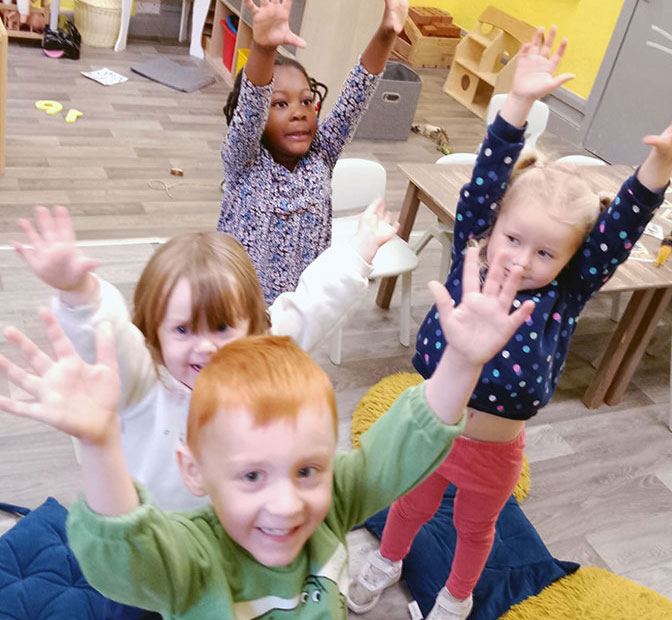
42 registered places. Around 30 children.
When parents visit Walmgate Day Nursery, they often comment on how calm the nursery feels. They notice children confidently chatting with practitioners, babies being comforted by familiar faces and staff greeting children by name as they arrive.
That atmosphere isn’t accidental. Although Walmgate is registered to care for up to 42 children, we deliberately choose to operate with around 30. We believe keeping our groups smaller gives children more opportunity to build strong relationships, feel secure and receive the individual attention they need.
For us, quality has always mattered more than simply filling every available place.
“Research into early years provision, particularly for babies and toddlers, has highlighted the benefits of smaller group environments. That’s why we’ve chosen to limit our room sizes and keep overall nursery numbers below our registered capacity. We believe children learn best when they’re part of a close-knit community where strong relationships can flourish.”
WHAT SMALLER GROUPS MEAN FOR CHILDREN
The benefits show up in the small, everyday moments that make up nursery life.

Every child is truly known
One of the greatest advantages of a smaller nursery isn’t necessarily something you can measure; it’s something you notice in everyday interactions. Children are recognised, their personalities are understood, and their favourite stories, friendships, interests and routines become familiar to the adults caring for them.
When practitioners know children well, they’re better able to notice new achievements, recognise when something isn’t quite right and respond to individual needs. Those genuine relationships help give children the confidence and security from which learning can grow.
A calmer environment
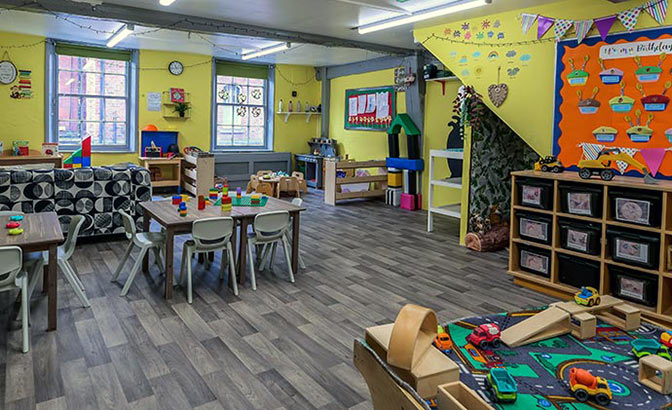
Young children learn best when they feel safe, settled and emotionally secure. Keeping groups smaller can help us create calmer spaces, with fewer voices competing for attention and more opportunity for children to listen, communicate and become absorbed in what they’re doing.
This is particularly valuable for babies and younger toddlers, who are still developing language, communication and emotional regulation. Calm doesn’t mean silent; nursery should be full of conversation, laughter and play. It means creating an environment that doesn’t feel unnecessarily overwhelming.
Stronger relationships with familiar adults
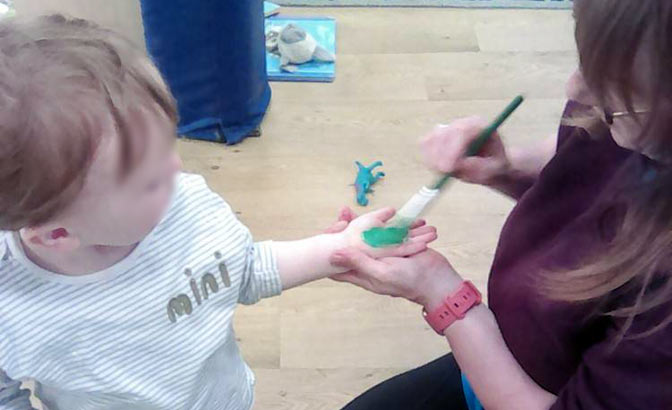
For babies especially, familiar and responsive adults matter enormously. Children gain confidence when the people caring for them understand their routines, recognise their cues and respond consistently.
Smaller groups give those relationships more room to develop naturally, through the many little interactions and shared moments that happen each day. For parents, there’s reassurance in knowing that the people caring for their child genuinely know them as an individual, rather than simply knowing their name on a register.
More time for meaningful learning
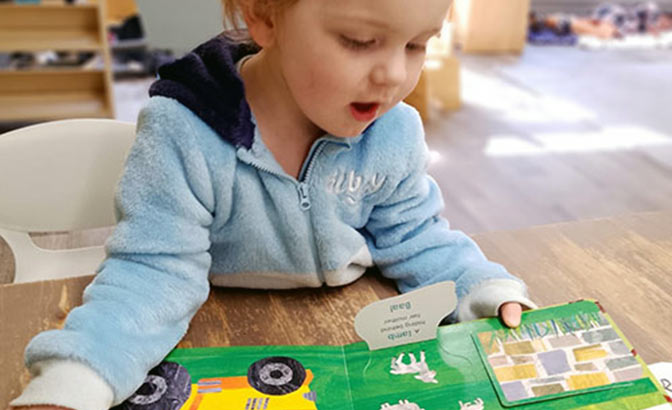
When practitioners have more opportunities to spend meaningful time with individual children, they can join their play, ask thoughtful questions and follow the interests that are already capturing their attention.
One child might become fascinated by insects, another by building and construction, while someone else develops a love of stories or music. Rather than expecting every child to follow the same activity in the same way, practitioners can extend learning naturally around each child’s curiosity and stage of development.
A family atmosphere
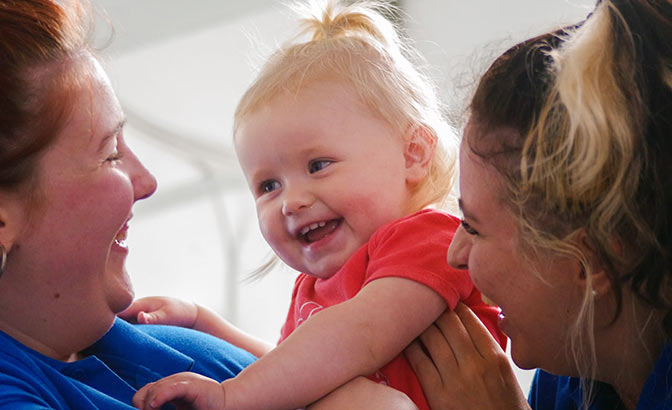
One of the comments we hear most often from families is that Walmgate feels different. Children know practitioners throughout the nursery, staff know siblings, and children of different ages recognise and interact with one another.
We’ve always wanted Walmgate to feel less like a large childcare setting and more like a small community in which children and families belong. Keeping the nursery intentionally smaller is one of the practical choices that helps us protect that atmosphere.
WHAT DOES THE RESEARCH SAY?
Our decision to keep Walmgate smaller wasn’t made because of a research paper; it’s been part of our approach for many years. However, recent research into early years provision, particularly for babies and children under two, provides some interesting support for many of the things we’ve experienced in practice.
A Nuffield Foundation-funded global evidence review examined 185 academic and grey-literature sources and found an association between smaller group sizes and higher-quality provision for children under two. The review also highlights the importance of sensitive, responsive relationships and low-stress environments for babies.
More recent research into baby rooms in England drew on survey responses from 357 baby-room educators and nursery managers, alongside focus groups involving 207 participants. It identified calm environments, secure relationships and responsive interactions as central to high-quality provision, and the researchers have subsequently encouraged settings to maintain smaller baby-room groups.
The research focuses particularly on babies, so we wouldn’t claim that group size alone determines the quality of a nursery. The people caring for children, their knowledge and experience, the environment, adult-to-child ratios and the relationships they build all matter too.
What the evidence does reinforce is something we’ve long valued at Walmgate: creating an environment where practitioners have the opportunity to know children well and respond to them as individuals.
WHY IT MATTERS TO US
Every family looks for something slightly different when choosing a nursery. Location, flexibility, outdoor space and facilities can all play a part. For us, though, one of the most important things we can offer is much simpler: a place where children are known, relationships have time to develop and children feel secure enough to explore, learn and grow in confidence.
That’s why, even though Walmgate could welcome more children, we choose not to. A nurturing, family environment isn’t simply something we want to talk about; keeping our nursery intentionally smaller is one of the practical choices we make to protect it.
FURTHER READING & RESEARCH
For families who would like to explore the evidence behind this page.
Nuffield Foundation — Quality in the Baby Room: Actionable Findings from a Global Evidence Review (2025)
https://www.nuffieldfoundation.org/wp-content/uploads/2024/07/Quality-in-the-Baby-Room-Actionable-Findings-from-a-Global-Evidence-Review.pdf
Sakr, Bonetti & Halls — Opening the Door to the Baby Room: Learning from the Experiences and Perspectives of Baby Room Educators and Nursery Managers (2025)
https://thebabyroom.blog/report-2/
Ofsted — Getting it right from the start: how early years practitioners work with babies and toddlers (2025)
https://www.gov.uk/government/publications/getting-it-right-from-the-start-how-early-years-practitioners-work-with-babies-and-toddlers
Nuffield Foundation — Achieving high-quality provision in the baby room of English nurseries (research project)
https://www.nuffieldfoundation.org/project/achieving-high-quality-provision-in-the-baby-room-of-english-nurseries
COME AND EXPERIENCE WALMGATE
The best way to understand our approach is to experience Walmgate for yourself. Come and meet the team, see the nursery and get a feel for whether Walmgate is the right place for your family.